Plantar pressure testing devices are mainly used to collect plantar pressure distribution parameters and analyze gait, posture, and other data.
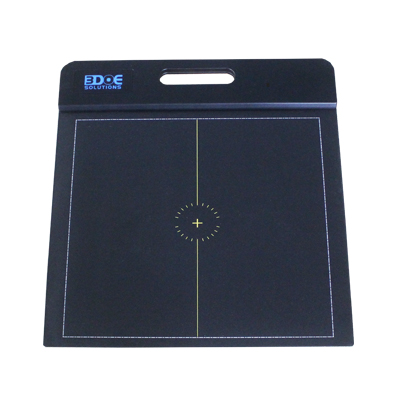
A plantar pressure testing device consists of sensors and a data acquisition system.
Pressure testing is different from ordinary measurement. Pressure testing can measure the change of pressure over time (dynamic) or the pressure distribution at a certain moment (static).
Plantar pressure testing can be used to study the force and variation of the human plantar during this period and to make relevant assessments of body function status. It can also provide relevant information for foot rehabilitation.
Plantar pressure detectors are widely used in medical, sports, rehabilitation, and health checkup fields.
The main functions of plantar pressure testing devices are:
- To determine foot disease conditions such as flatfoot, high-arched foot, plantar fasciitis, hallux valgus, and other symptoms, pressure testing is usually considered a decisive basis for judging normality.
Doctors can use pressure testing to determine whether the arch has collapsed, whether the forefoot pressure is too high, and whether the heel is deviated. This information is more helpful for doctors’ diagnosis and treatment.
In clinical diagnosis of foot diseases, the pressure testing method has been applied in the diagnosis and treatment process.
Compared with simple visual observation, pressure testing is more intuitive, and its quantitative value is higher than general examination. It is simple, convenient, and very accurate.
- Many people mistakenly think that custom insoles can be made only according to the shape of the foot. This is not the case. Testing the shoes can properly apply pressure.
By using plantar pressure testing to find areas that need elevation, cushioning, or pressure reduction, and then using three-dimensional foot data to make insoles.
For children, the elderly, and diabetic patients, protecting the foot from injury through pressure testing makes them feel more comfortable and can greatly improve the correction effect.
- In customized sports or training, the foot often receives a single acting force, which frequently causes injury to the knees, ankles, and arches.
Plantar pressure testing can capture fluctuating signals of plantar pressure during running and jumping, and analyze whether gait has overpronation, supination, or excessive force applied during forefoot contact.
Coaches or rehabilitation specialists can use the results of pressure testing analysis to adjust exercise posture, shoe shape, or customized support. This not only improves sports performance but also reduces injury caused by exercise.
Common application scenarios of plantar pressure testing:
(1) Postoperative walking test: It can test whether stroke patients’ walking is stable enough and whether there are any problems. If there are problems, it can also be simulated on a computer. It can measure the pressure difference of the weighted foot and walking trajectory data.
(2) Post-lower-limb surgery walking test: Test the unevenness of walking after lower-limb surgery. Through the test data scheme, gait training is carried out to restore patients’ walking and increase their confidence.
(3) Orthopedic injury walking test: Allows walking tests for orthopedic injuries. Through comprehensive data testing schemes, it provides walking training for patients, thereby enhancing patient confidence.
(4) Children’s arch development and elderly foot care: Because children’s arches are not well developed, plantar pressure testing can be used to observe arch growth. (Using an arch corrector to help arch development.)
Elderly gait changes: Most gait changes in the elderly are due to gradual body degeneration, bone problems, falls, and so on.
Plantar pressure testing can test balance ability, uneven foot stepping, risk of falling, and related issues.