People have now realized the importance of the foot in modern medical care and sports. For example, for flat feet, high arches, plantar fasciitis, and so on, conventional correction methods usually rely on precise data. The plantar pressure test plate plays an important role in corrective insoles and plantar pressure testing.
1. Introduction and Principle of the Plantar Pressure Test Plate
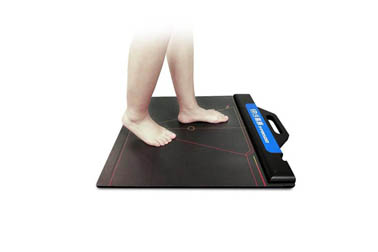
The plantar pressure test plate is specifically used to test the pressure of different areas of the foot sole.
It uses the plantar pressure plate to test the pressure of the foot sole, and then customizes insoles according to the pressure.
The principle of the plantar pressure test plate is very simple. Sensors are placed on a specialized plate. When a person steps on it, different parts of the foot come into contact with the plate, and the sensors test the pressure of each part of the foot.
The data is then transmitted to a computer, which analyzes where the pressure is high, where it is low, and where it is dispersed. Only in this way does the customized insole have a basis, and the data obtained from the test can truly be useful.
2. The Combined Effect of the Plantar Pressure Test Plate and Insoles
People have different foot structures and gaits, so custom insoles must be tailored.
Only professional personnel using a plantar pressure test plate can more accurately understand the pressure condition of the foot sole and create insoles that better meet personal needs.
During the test, the plate records all the pressures under the foot, including points of high pressure and points of least uniformity.
For people with flat feet, the inner side of the foot may bear greater pressure; for people with high arches, the heel and dorsum may bear greater pressure.
This data can guide designers to adjust the thickness, hardness, and shape of the insole, so that the insole can adapt to discomfort, reduce foot pain and fatigue, and be beneficial for the normal development and repair of the foot.
3. Optimizing the Effect of Insoles Using Pressure Testing
Many traditional corrective insoles are designed for common foot problems, but the difference lies in the individual’s foot structure and needs.
The plantar pressure test plate breaks through this limitation.
Insoles designed based on personalized analysis are more accurate and ergonomically suitable.
For example, if a test finds that pressure at a certain point on the foot is too high, the designer can add a cushioning material at that point or use the curve design of the insole to effectively disperse the pressure.
The information provided by the test plate makes insole design no longer “blind,” and designing based on real data is more beneficial for foot health.
4. Improving Foot Health and Comfort
Long-term poor posture or foot diseases often cause many problems in the lower limbs, such as knee pain or back discomfort.
By adjusting the insole to optimize the pressure distribution of the foot sole, these problems can be greatly reduced.
The application of the plantar pressure test plate in corrective insoles can ensure the scientific and effective design of the insole, providing the wearer with a more comfortable experience.
Through testing and analysis, the plantar pressure test plate can assist designers in making corrective insoles that meet personal requirements and provide a scientific basis for foot health management, allowing more people to conveniently enjoy daily life with a comfortable gait.