Can a plantar pressure plate improve gait and posture?
- Whether an individual wants to relieve knee pain, enhance athletic performance, correct long-term poor gait, or work as a rehabilitation therapist or sports coach, the truly effective way to restore post-injury function is not through blind experience, but starts with precise measurement and systematic training.
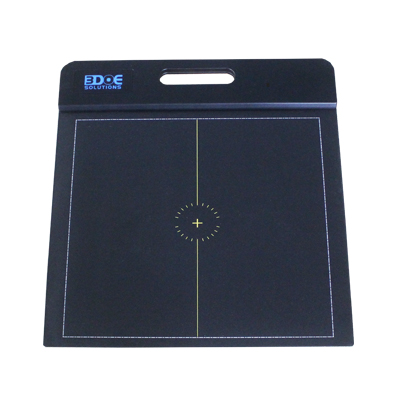
A plantar pressure plate is not a magical device; it is a medium that transforms the interaction between the foot and the ground into visualized data.
Every time one stands or walks, the plantar contact patterns with the ground carry information about joint alignment, muscle coordination, and postural chains.
The pressure plate reveals not only the instantaneous load points but also the center of gravity shifts, step rhythm, bilateral load differences, and the overall pathway of foot pressure.
If corrections are guided solely by visual observation or subjective feeling, even if short-term effects are occasionally achieved, they are often only compensatory changes and do not achieve true functional reconstruction.
A scientifically sound intervention should first identify the problems through measurement, and then use evidence-based training to correct incorrect movement patterns.
The greatest value of a plantar pressure plate lies in its ability to show overlooked details in the data, making training more directional and targeting the underlying cause rather than the surface manifestation.
When assessment and training form a closed loop, rehabilitation is no longer a matter of luck but becomes a replicable outcome.
- Without systematic evaluation, any intervention can go astray.
Adjusting gait and posture based solely on feeling cannot ensure long-term effects; with information provided by the pressure plate, the effects of interventions can be quantified, tracked, and compared.
The pressure plate analyzes both temporal-spatial parameters and foot contact zones, revealing which muscle groups are overloaded and which joints form chain compensations due to abnormal alignment at certain stages.
This information provides direct evidence for creating personalized training programs: through gait training, muscle balance exercises, neuromuscular re-education, and orthotic support, each step gradually becomes more economical and symmetrical.
The significance lies in the fact that results are not achieved overnight; they rely on repeated assessment and fine-tuning of the plan.
As displayed metrics on the pressure plate gradually improve, confidence grows that the postural chain is being reconstructed rather than temporarily masked.
This is why the clinical and sports fields increasingly emphasize data-driven interventions, as such approaches transform subjective judgment into a verifiable scientific process.
- Technology is not omnipotent, but methods can be optimized.
A plantar pressure plate is only a measurement tool; the effectiveness depends on the evaluator’s understanding, the training plan design, and the user’s implementation and adherence.
High-quality intervention involves four components: precise data acquisition, professional interpretation, targeted training, and long-term follow-up.
True improvement occurs only when optical or force sensors ensure repeatability and accuracy, algorithms can distinguish physiological variations from abnormal patterns, and treatment plans focus on the joint chain rather than isolated foot correction.
Additionally, individual differences such as age, prior injuries, and occupational load influence the speed and depth of intervention.
We should not view the pressure plate as a universal solution, but as a mirror that clearly reflects problems and the rehabilitation process.
When a person no longer relies solely on intuition to adjust gait, but uses data to guide training and evidence to direct decisions, gait and posture improvement shifts from chance to certainty.
It is not only a skill brought by technology, but also a reflection of progress in medical and rehabilitation practice.