Many issues such as long or wide feet, hallux valgus, or uneven arch height often make the selection of shoe size very troublesome.
Just as tailoring clothes requires accurate measurements, a plantar three-dimensional laser scanner can accurately measure the shape of the foot, thus providing a scientific basis for choosing the right shoe size.
When choosing shoes, not only should the style be aesthetically pleasing, but it must also match the structure of the foot. In addition to the shoe’s own design, accurate data should be used to recommend a suitable shoe size. So how can a plantar 3D laser scanner be used to find the most suitable shoe size? Generally, the following aspects can be considered:
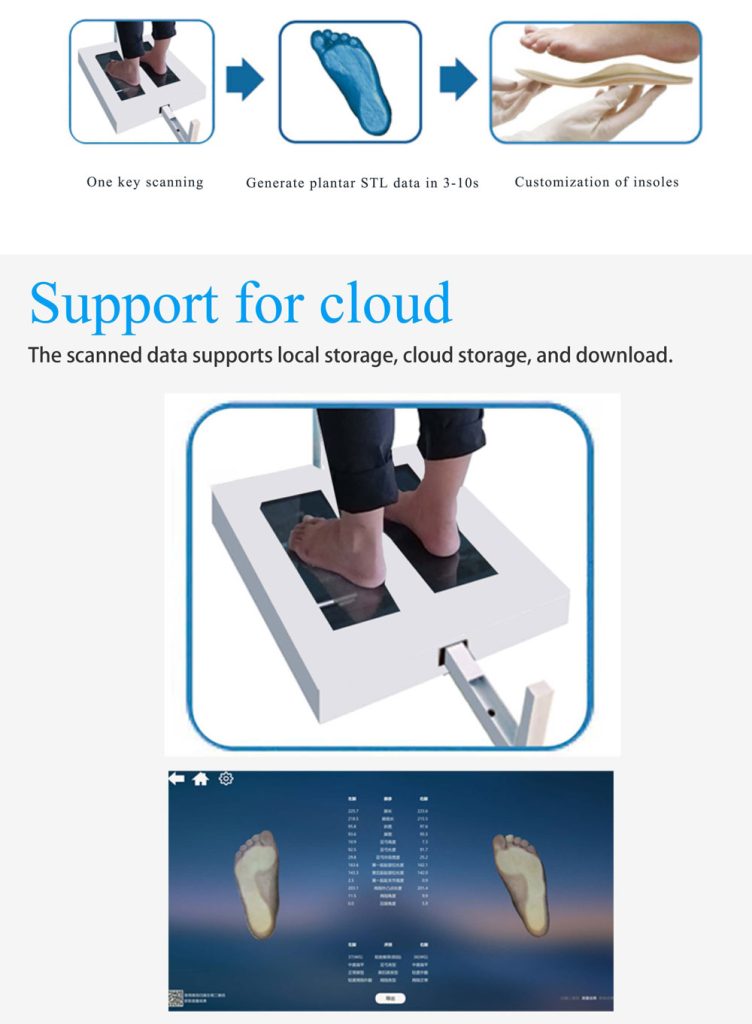
I. Accurate measurement of foot data
The plantar three-dimensional laser scanner can achieve simultaneous multi-dimensional measurement of foot length, foot width, foot circumference, and arch height.
Compared with traditional manual measurement, laser scanning can capture fine details of the foot, such as hallux protrusion or arch depression, making it possible to more accurately determine the matching degree between shoe size and shoe shape.
II. Personalized shoe size suggestions
1. Different feet
Everyone has different foot shapes, arch structures, and pressure distribution, and standard shoe sizes cannot meet personalized needs.
By using 3D data to create a foot model, the system can recommend the most suitable shoe size and shoe shape for users. This includes shoe width, toe shape, and insole thickness, making the shoes fit more closely to the foot and reducing the risk of friction and pressure.
2. Meeting different needs
For different use scenarios such as running, hiking, or daily commuting, shoe size selection may vary.
Data from the scanner can be combined with the use scenario to suggest slightly wider or larger shoe sizes to ensure comfort during movement and avoid foot fatigue or injury caused by incorrect sizing.
III. Matching material and comfort
1. Insole and outsole material
After accurately measuring the shoe size, it is also necessary to select appropriate insole and outsole materials.
Soft, elastic insoles can reduce plantar pressure, and breathable uppers reduce heat and odor. Outsoles with moderate hardness provide good cushioning and support during walking to prevent long-term burden from concentrating on the heel or forefoot.
2. Scientific workmanship
The same applies to footwear manufacturing craftsmanship.
The precise combination of accurate shoe lasts and 3D data ensures stable shoe sizing and neat shaping, enhancing overall wearing comfort while preventing deformation and foot pressure caused by long-term wear.
IV. Comfort and adaptability
1. High fit
Shoes should closely fit the shape of the foot without squeezing, especially paying attention to the forefoot, instep, and arch posture.
This utility model uses scanning data for shoe selection, ensuring that during walking, standing, or even running, the shoes provide stable support for the foot, reducing fatigue and potential injury risks.
2. Easy adaptation
Even when wearing new shoes for the first time, adaptation is greatly shortened because the recommended size is based on personal foot shape.
Scientific sizing matched with plantar pressure distribution makes walking more natural and comfortable, and also avoids discomfort and injury caused by shoes being too small or too large.